
It is almost election time, but what are we voting for? The 2026 midterm elections.
The 2026 general election will be held Nov. 3. Unlike a presidential election, midterm elections do not include a presidential race. Instead, voters will choose candidates for federal, state and local offices.
So, what is on the ballot?
In Wisconsin, voters will have races for the U.S. Senate, U.S. House of Representatives, governor, state Senate and state Assembly, along with judicial and local offices.
In Minnesota, voters will have races for the U.S. Senate, U.S. House of Representatives, governor and lieutenant governor, secretary of state, state auditor, attorney general, state Sen-ate and state House of Representatives.
In both Minnesota and Wisconsin, judicial races, local offices and ballot questions may al-so appear on individual ballots. Earlier this year, Minnesota and Wisconsin held prima-ry elections. Minnesota and Wisconsin both hold partisan primaries. During a partisan primary, voters select candidates from a political party. The candidates who win their party’s primary then move on to the general election ballot in November.
The general election works differently. Voters can choose candidates from different political parties for different offices on the same ballot.
Why do midterms matter?
While midterm elections do not include a presidential race, they still determine who holds important positions in government. The people elected in November will make decisions on issues that affect voters at the federal, state and local levels.
At the federal level, the election determines which members of Congress will represent each state in the U.S. House and Senate. At the state level, voters choose officials who help shape laws and policies that can directly affect residents, including areas such as education, taxes, transportation and health care.
Local races can also have an impact on students and community members. Depending on where you live, your ballot may include races for city, village, town or county offices, as well as referendums or other local questions.
Because midterm elections take place between presidential elections, they can receive less attention than presidential races. However, the officials elected during midterms serve during the same period that the president is in office and can influence how the government operates during those years.
How can you vote?
If you are voting in Wisconsin, MyVote Wisconsin allows voters to check their registration, find their polling location, see what will be on their ballot and request an absentee ballot.
Wisconsin voters can request an absentee ballot without providing a reason. For the Nov. 3 election, regular voters must request an absentee ballot by 5 p.m. on Oct. 29. Completed absentee ballots must be received by the municipal clerk by 8 p.m. on Election Day.
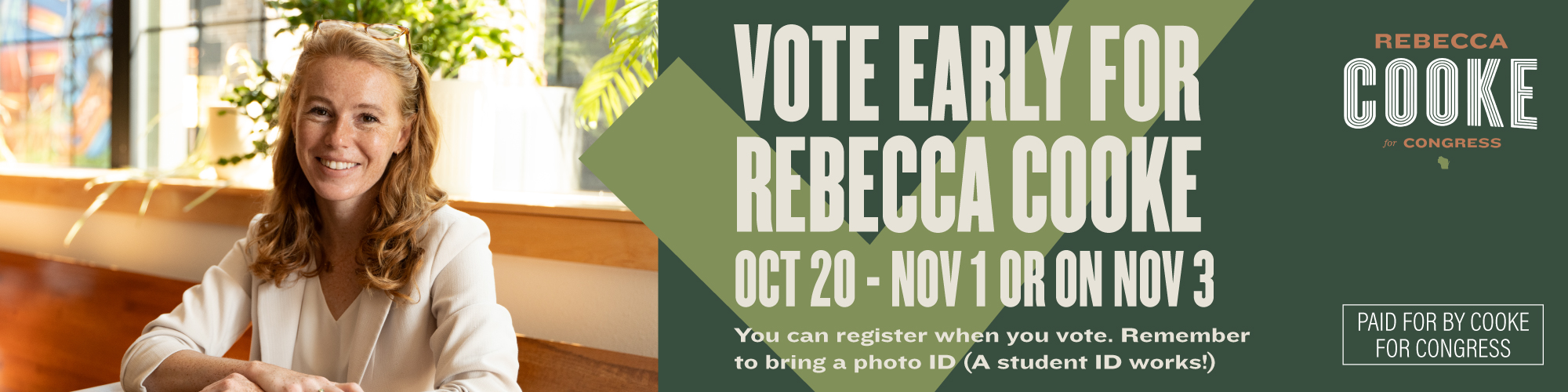
Wisconsin’s advance registration deadline is Oct. 14, but voters can still register in person at their municipal clerk’s office through Oct. 30 at 5 p.m. or register at their polling place on Election Day.
For students voting in River Falls, polling locations depend on the ward where they live. Voters who live on campus or in wards 10 through 13 vote at the UWRF Falcon Center. Other River Falls polling locations include St. Bridget’s Catholic Church, River Falls City Hall and River Falls High School.
Minnesota voters can vote early in person or by mail beginning Sept. 18 through Nov. 2. Information about registration and polling locations in Minnesota can be found at MN Votes. In Minnesota, absentee ballots must be received by Nov. 3. Minnesota’s advance registration deadline is Oct. 13, but voters can also register at their polling place on Election Day.
If you are unsure where you vote or what will appear on your ballot, check your state’s election website before Election Day. Your ballot may include races and questions that are different from those of your friends, depending on where you live.
